Investment
service

Fund Managers

Bayview Asset Management believes the Investment is equivalent to manufacturing as a management policy unique to boutique houses, and we put much of its resources into the investment departments, improving expertise and maintaining quality.

Fund managers are responsible for investments. Our fund managers invest in Japanese stocks, bonds, and multi-assets, while our partners, top-class boutique houses in U.S., invest in overseas stocks and bonds, primarily in the United States.

Our company provides a "platform" to each fund manager to let them focus on investment, optimizing its expertise.

Bayview Asset Management

(写真:岡橋功樹)

Equity Investment Management
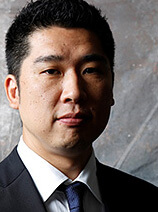
Koki Okahashi

Equity: Long/ Long Short

(写真:谷川崇人)

Equity Investment Management
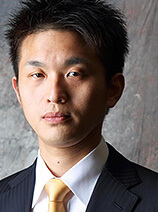
Takato Tanikawa

Equity: Long Short

(写真:坂本玄樹)

Equity Investment Management
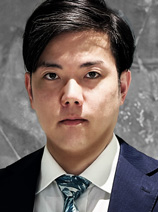
Genki Sakamoto

Equity: Long

(Photo)

Koki Okahashi

New Alphex Long Short Fund,Highly Selective Japan Mid/Small-cap Equity Fund with original approach combining bottom-up corporate analysis and top-down market analysis

Risk needs to be capilalized and transformed to return.

Koki Okahashi joined a major trading house upon graduating from university where he was engaged in the business of accounting and tax matters in the accounting division. The situation he faced when he was sent on a business trip to Mongolia in order to perform an audit of a local company became the starting point of his career from then on. The company dominated the mobile phone business in Mongolia, and the president was a figure that had been the right hand man of a minister, however, seeing this person being extremely apprehensive of Koki Okahashi who had very little experience as a working member of society made him strongly realize that he was protected by the name of the large Japanese company. Thinking that he would rather be a working professional and get by on his own than be reliant on a company name, he moved to a venture firm providing financial consulting services in 2001. While he worked on establishing a housing loan company, the due diligence for a corporate acquisition, and financial advisory operation of PFI projects, he faced the risk of his company going bust due to the burst of the IT bubble, but he overcame the hardships as a businessman.

In 2005, when Koki Okahashi was invited to found an independent asset management company, he plunged into the world of equity investment management. Inspired by the words that what is necessary for equity investment management is not past experience but curiosity and an intuitive sense, he thought he had a chance despite his lack of investment experience. Furthermore, for him, who had strived to acquire a broad range of knowledge to generate projects at the venture firm, equity investment management as an occupation was highly appealing because it was a profession in which intellectual curiosity itself led to results, and that was why he made the career change.

Koki Okahashi later on identified many promising stocks as an analyst of the Japanese equity long/short fund, the source of excess return (alpha) for which is Mid/Small-cap equity investment, and played an active role as the driving force to keep the investment management team afloat through the Live Door shock in 2006 and the Lehman Shock in 2008. Meanwhile, many institutional investors specializing in Mid/Small-cap stocks disappeared one after the other, making Koki Okahashi one of the very few experts in this field.

Then, in July 2010, his investment management team decided to move to Bayview Asset Management in search of a stable platform. Koki Okahashi, while continuing to rack up an overwhelming track record in stock picks, began to think he wanted to manage a portfolio himself, applying his skills to analyze companies that he had developed by managing equity investments, and became the fund manager for New Alphex Long Short and Highly Selective Japan Mid/Small-cap Equity Fund since July 2014.

Koki Okahashi has a broad perspective acquired from being involved in various businesses other than finance in a large company and venture firm. With such experience as his advantage, Koki Okahashi will take on the new challenge with a strong will to identify excellent Mid/Small-cap companies upholding the Japanese economy before anyone else and to generate alpha exceeding domestic and overseas managers.

[Biography] Koki Okahashi joined Bayview Asset Management Co., Ltd., (BVAM) in July 2010 from Alphex Investments Co. when the latter's funds under management and management team were transferred to the former. He was promoted to head the Investment Management Group II in March 2014, and then was assigned as fund manager when the Equity Investment Management Team was established. At Alphex, Koki was responsible for corporate research as an analyst for the Japanese equity long/short strategy, a position which he held since the founding of the company in 2005. Koki had started his career in 1995, joining Sumitomo Corporation where he was assigned to the accounting division to support the company's overseas infrastructure projects and the automobile, media, and electronics businesses with accounting and tax matters. In 2001, he joined a venture company founded by a group of former employees of the Industrial Bank of Japan Ltd. (currently Mizuho Bank Ltd.) to set up Japan's first mortgage bank, Mortgage Corporation of Japan Ltd., where he engaged in the due diligence of a Japanese company buying out a Chinese steel maker, as well as in the financial advisory operation of PFI projects of municipal governments. Koki received B.A. in business and commerce from Keio University in 1995.

(Photo)

Takato Tanikawa

Bayview Japan Equity Long Short Fund under bottom-up & top-down approach that incorporates investor behavior analysis

The eyes of a bird, an insect, and a fish

Takato Tanikawa first became interested in the financial industry when he was exposed to venture financing as a university student. As he learned how difficult it is for venture firms to raise fund in the course of researching the key elements for venture firms to succeed, he became interested in supporting the financing of start-up firms that would grow in the future, and so, he joined a domestic securities firm.

As a member of the firm's Japanese equity research and sales team, Tanikawa provided investment information and ideas on individual companies to investment management firms. During the five years of service, he realized that information provided by sell-side analysts are only extension of the past, and in many cases, already incorporated in stock prices. On the other hand, many fund managers he contacted captured changes in the stock market and companies speedily and conducted investment actions based on their own ideas, which fascinated him to buy-side investment management. A fund manager who had a big influence on this growing fascination was Sakuma of Bayview Asset Management.

Unlike fund managers of other companies, Sakuma would not listen to Tanikawa unless Tanikawa explained the stock issues he unearthed from the market with his own words, and even making an appointment was difficult at first. Sakuma, however, gradually started to listen to Tanikawa's explanations, which were backed by in-depth research and analysis. Sakuma said during a discussion with Tanikawa on a game related company "Without understanding the history of game development process, we cannot accurately judge the company's capital policy." Tanikawa was inspired by Sakuma's insights in the historical background of companies, which many market participants overlooked. This made Tanikawa want to work with Sakuma, and Tanikawa decided to join Bayview Asset Management in 2012. Tanikawa refined his ability to find promising individual stocks as an analyst under Sakuma and recommended stocks by newly incorporating investor behavior analysis, which Tanikawa found extremely important during his experience in the research and sales days. These bore fruit and Tanikawa became the co-fund manager of Bayview Japan Equity Long Short Fund in April 2016. He was later promoted to fund manager after Sakuma's retirement in June 2017.

In the stock market today, investor behavior that has significant impacts on market movements changes every minute, such as that the trading turnover of leveraged ETF exceeding that of large-cap stock. Tanikawa starts taking on challenges as a fund manager, with the belief that when investing in stocks, good returns can be achieved only when investment decisions are made based on not only analysis of individual companies fundamentals, but also from fresh viewpoints that discern stock market trends, with the eyes of a bird (macro viewpoint), an insect (micro viewpoint) and a fish (trend viewpoint).

[Biography] Tanikawa joined Bayview Asset management Co., Ltd. in May 2012. He started his career at Shinko Securities in 2007 (current Mizuho Securities), where he was engaged in research and sales for institutional investors, mainly for Japanese investment firms, at the equity sales department and the institutional investor sales department. Tanikawa received his B.A. in business from Tokyo University of Science in 2007.

(Photo)

Genki Sakamoto

A bottom-up Japan equity investment strategy with small and mid-cap stocks as the main engine and large-cap stocks as the sub-engine,
“Blue Moon Japan Equity Concentrated Fund”

Investment performance comes from an insatiable hunting spirit of research

Genki Sakamoto‘s interest in the bottom-up company analysis dates back to his college days. As he traveled abroad and came into contact with different cultures, what remained in his mind was the image of Japanese companies that permeated the emerging region, through the billboard advertisements of major Japanese consumer electronics manufacturers in the hot South Asian cities and through the aging Japanese automobiles driving along the frontier of the Arabian Peninsula. In the 2000s, with the rise of emerging economies and the declining competitiveness of Japan, he began to think about the strengths and raison d'être of Japanese companies. At the time, he was vaguely interested in a career in journalism, where he would earn information on his feet. Still, an internship at a major economic newspaper allowed him to research companies, and Genki decided to enter graduate school to study companies seriously.

After entering graduate school, Genki conducted research about the challenges and strategies of Japanese companies by comparing the policies and industrial structures of various countries through on-site surveys on the infrastructure industry. Based on his intellectual curiosity, he became interested in equity investment, to discover companies that would support and grow Japan. Around that time, Genki met Bayview Asset Management, which was recruiting its class of new graduates for the first time. He joined the firm in 2011, hoping to realize his dream by challenging himself and growing within an investment management boutique house that prides itself on its elite few. During the initial three-year training period for new employees, he worked in the Investment Management Operations, which calculates the NAV of mutual funds, and learned about the individual stocks traded by the investment team and how their price movements generate fund returns on a daily basis. In July 2014, he was selected as the first member of the management team led by Koki Okahashi, who had just been appointed as Bayview’s fund manager. Under Koki’s mentorship, Genki began his training as an analyst for the Long/Short Japanese Equity Fund and Long Only Fund, both of which invest in small and mid-cap equity as a source of excess return (alpha).

Since 2005, Genki’s mentor, Koki Okahashi has experienced considerable corporate analysis as an analyst specializing in small and mid-cap stocks. Since, Koki becoming a fund manager in 2014, he has consistently achieved industry-leading performance. Genki Sakamoto, who had just started to follow in the footsteps of this giant, was quickly reminded of the imperfection of his stock analysis. No matter how much information he gathered and how objectively he presented his insights, he was rejected for not having an original point of view. He had struggled with the gap between the company analysis and the idea generation required by the fund manager. Genki learned a lot from Koki, who was quick to seek out new investment opportunities and “take the risks that needed to be taken,” when the stock market was repeatedly in a severe risk-off phase. For example, in 2018, when the economic conflict between the U.S. and China worsened the supply-demand balance for stocks, illiquid small and mid-cap stocks fell sharply. The lesson learned was that small and mid-cap stocks, which are difficult to buy and sell opportunistically, require a high degree of accuracy in stock selection. While Koki was temporarily hurt by maintaining a bullish portfolio in the early stages of the new coronavirus epidemic in 2020, Koki subsequently benefitted for the new normal investment opportunities during the market recovery phase, and Genki also contributed to returns with his resourceful corporate research and effective stock recommendations to Koki.

After 9 years of intense training as an analyst, Genki started a new challenge as a fund manager of “Blue Moon Japan Equity Concentrated Fund” in September 2023, which aims to gain alpha by investing in small and mid-cap stocks as its main engine while also considering opportunities to invest in large-cap stocks as a sub-engine. Since joining Koki’s team, Genki has grown to have expanded the scope of his thinking from his original perspective with an inquisitive mind that looks at national policies and industrial structure from a bird's eye view. In the process, he gradually became aware of the strength and growth potential of large-cap stocks by looking beyond the supply chain to large companies and overseas situations. He came up with a unique long-only investment strategy that also considers investment opportunities in large-cap stocks, whereas his mentor, Koki Okahashi, specialized in small and mid-cap stocks.

The term “Blue Moon” refers to the special phenomenon of a full moon that usually occurs once a month, but comes around twice, and is taken from Genki’s desire to pursue special performance over the long term.

[Biography] After joining Bayview Asset Management in April 2011, he worked in the Investment Management Operations and then in the Japanese Equity Investment Management as an analyst from July 2014, mainly engaged in research and analysis of small and mid-cap stocks. He graduated from the Faculty of Literature, Keio University (majoring in Human Sciences) in 2009, and received his MBA from the Graduate School of Business Administration, Keio University in 2011. He is a Certified Member of the Securities Analysts Association of Japan (CMA).